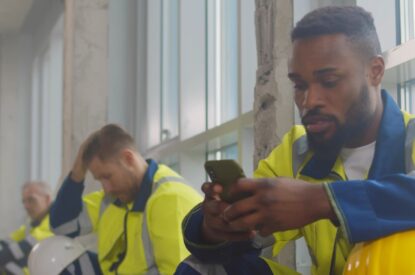
It’s a Wednesday morning on your construction site. One of your superintendents notices a crew member, let’s call him Chris, hasn’t been himself lately. He’s quiet, snappy with coworkers, missing small steps during walkthroughs. Always the first to arrive, now he’s dragging in late and skipping breaks to sit alone in his truck.
Nothing’s been said, but something’s not right.
After the morning safety meeting, the superintendent walks over and checks in.
“You doing okay?”
Chris shrugs. “Just tired, that’s all.”
But after a minute of silence, he admits he’s sleeping in his car. Going through a divorce. Struggling with bills. And lately… wondering if anyone would really notice if he were gone.
That conversation may have saved Chris’s life. And it reminded your entire crew: this work is hard enough without pretending we’re not human.
The #1 Cause of Death in Construction? Suicide.
The leading cause of death in construction isn’t falls or equipment failures; it’s suicide.
Every year, more than 6,000 construction workers in the U.S. die by suicide. That’s six times more than jobsite fatalities. And it’s not just happening off the clock. It shows up on the job in absenteeism, conflict, mistakes, substance misuse, and quiet moments that feel a little too quiet.
Construction is tough. Long hours. Physical wear. Cyclical work. Pressure to perform. And a culture that often rewards silence over vulnerability. Most workers won’t speak up until it’s too late.
When We Don’t Talk About It, We Risk Everything
If no one had checked on Chris, what could’ve happened?
Maybe he walks off the job. Maybe he makes a mistake that puts others in danger. Maybe he doesn’t come back at all.
We’ve all heard stories like this, sometimes secondhand, sometimes too close to home.
These moments don’t just impact individuals. They affect your entire business in a variety of ways:
Delayed schedules
Injured teammates
Crew morale hitting rock bottom
Good people burning out or disappearing with no explanation
What Forward-Looking Contractors Are Doing Now
Across the country, construction leaders are embedding mental health into safety culture, not as a one-off HR program, but as a long-term business commitment.
Here’s what it looks like:
- Monthly toolbox talks focused on mental health, just 10 minutes to check in and normalize conversation
- QPR training for supervisors (the mental health version of CPR)
- Peer connectors trained to spot warning signs and offer support
- Hard hat stickers and wallet cards with the 988 Suicide & Crisis Lifeline
- Quiet spaces or wellness trailers for high-stress jobsites
- On-site or virtual counseling access through EAPs or local providers
Some companies are even stocking Naloxone (Narcan) on site to reverse opioid overdoses, treating substance misuse the same way we treat physical injury: quickly, and without shame.
Take the First Step with One Conversation
You don’t have to be a mental health expert. But you do have to be present and proactive.
That’s what Construction Suicide Prevention Week is all about. Every September, job sites across the U.S. participate in short, meaningful conversations about mental health. You’ll find everything you need, including toolbox talk scripts, signage, and even a national moment of silence.
Leadership Means Looking Out for Your People
The best leaders don’t just build structures. They build cultures where safety means more than PPE and fall protection, where people know they can ask for help, and where jobsites aren’t just productive… but human.
If you’re serious about retention, execution, and building something that lasts, start here:
- Add mental health to your safety program.
- Train your supervisors to recognize signs and start conversations.
- Normalize talking about the hard stuff.
- Share the 988 Lifeline like you’d share a first aid kit.
Because bringing someone home safe isn’t just about the physical. It’s about their mind, too.
Let’s make sure we protect both.